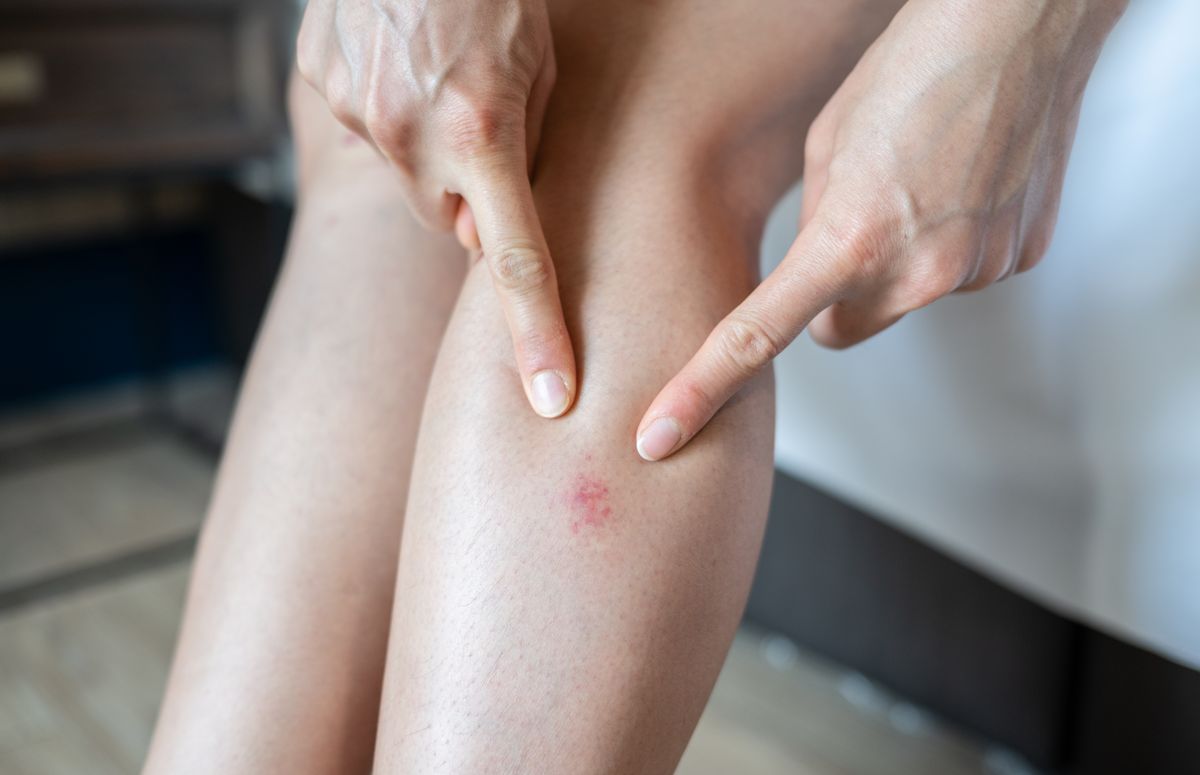
1. Introduction|“Is this just a sore… or could it be syphilis?”
After sex, have you ever had thoughts like:
- “I had a small sore on my genitals that disappeared on its own. It can’t be an STD… right?”
- “I’ve got red spots on the soles of my feet and feel like I have the flu. Could this be syphilis?”
Syphilis can sound like an old-fashioned disease, but it’s still very much present today as a sexually transmitted infection (STI / STD).
What makes syphilis tricky is that symptoms can come and go, and they’re often mild or vague.
So it’s easy to dismiss it as:
- “Just a skin irritation,”
- “I’m probably just tired,”
and move on with life.
But syphilis is not just a skin problem.
It’s a systemic infection caused by a bacterium called Treponema pallidum that can travel through your bloodstream and affect your entire body.
If syphilis is not treated in time, it can slowly damage:
- the brain and nervous system,
- the heart and major blood vessels,
- the eyes and hearing,
and in pregnancy, it can pass to the baby and cause congenital syphilis.
There is, however, one very important piece of good news:
- Syphilis is still a treatable, curable STI.
- If you get a proper syphilis test and follow medical advice,
- and receive the recommended penicillin injections (syphilis treatment),
most people can be treated and move on with their lives.
In this post, we’ll walk through, in simple language:
- What syphilis actually is
- The causes of syphilis and how it spreads
- Early and later syphilis symptoms, step by step
- How syphilis testing (blood tests) works
- Syphilis treatment options and the possibility of cure
- Practical tips to prevent syphilis in daily life
All in one place, so you can get a clear, big-picture understanding without medical jargon.

2. What Is Syphilis? Basic Facts and How It Spreads
Let’s start with the basics.
1) What kind of disease is syphilis?
Syphilis is:
- an infection caused by a spiral-shaped bacterium called Treponema pallidum,
- one of the classic sexually transmitted infections (STIs / STDs).
It’s not just a surface skin issue.
- It starts on the skin or mucous membranes,
- then can spread through the blood and lymph system,
- and eventually affect organs throughout the body.
That’s why syphilis symptoms can change over time:
- At first, it might just look like a sore on the genitals.
- Later on, it can show up as rashes, hair loss, nerve problems, heart issues, and more.
2) How do you catch syphilis? (Main routes of transmission)
There are three main ways syphilis can spread.
① Sexual contact
- This includes vaginal sex, anal sex, and oral sex.
- The bacteria enter through tiny, often invisible cuts or through the mucous membranes.
- Having unprotected sex (no condom) significantly increases your risk of syphilis and other STIs.
② Transmission during pregnancy (congenital syphilis)
- If a pregnant woman has syphilis,
- the bacteria can cross the placenta and infect the baby.
- This can lead to congenital syphilis, miscarriage, stillbirth, or serious health problems in the newborn.
③ Rare routes – contaminated blood or needles
- Thanks to modern blood screening, this is now very rare,
- but in theory, syphilis can spread if infected blood directly enters the body.
To sum it up:
“Unprotected sex + not knowing your partner’s STI status”
is the classic high-risk scenario for syphilis and other STIs.
3. Syphilis Symptoms by Stage – From Early to Late
Syphilis is confusing because:
- symptoms change from stage to stage, and
- there is a “silent” latent phase in between.
You might feel like you’ve recovered,
while the infection is actually still ongoing inside your body.
1) Primary syphilis – a painless sore (chancre)
- Usually appears about 3 weeks after infection.
- Shows up as a round, firm sore (ulcer) on:
- the genitals,
- around the anus, or
- on the lips or inside the mouth.
- There may be one sore or several.
- The key point: it usually doesn’t hurt very much.
- After about 3–6 weeks,
the sore can disappear on its own, even without treatment.
At this point, many people think:
“The sore is gone and it didn’t hurt much – it probably wasn’t an STD.”
But by that time, the bacteria have often already:
- entered the bloodstream and lymph system,
- and started spreading throughout the body.
So even if early syphilis symptoms fade away,
it does not mean the infection is cured.
2) Secondary syphilis – rashes and flu-like symptoms
Weeks or months after primary syphilis,
secondary syphilis may appear.
Typical features include:
- A widespread rash, often including the palms and soles of the feet
- It can look like:
- an allergic reaction,
- scattered red spots or patches.
- Flu-like symptoms:
- fever,
- headache,
- muscle aches,
- swollen lymph nodes,
- general tiredness.
- Rashes or spots inside the mouth or around the genital area.
- In some people, hair loss in coin-shaped patches.
Symptoms may come and go.
Eventually, they can fade away again and move into the latent stage.
3) Latent syphilis – no visible symptoms, but infection remains
Latent syphilis literally means “hidden syphilis.”
- You may have no obvious syphilis symptoms.
- But a syphilis blood test (antibody test) will still come back positive.
- During this stage, if you become pregnant,
the infection can still pass to the baby. - You can also still infect a sexual partner.
Time keeps passing,
but the person may be living with syphilis without knowing it.
That’s why testing matters so much.
4) Tertiary syphilis – serious complications after many years
Before modern treatment, syphilis could quietly progress over many years and eventually:
- damage the heart and major blood vessels (like the aorta),
- or attack the brain and nervous system,
leading to:
- paralysis,
- vision problems,
- memory issues,
- personality changes,
and other severe complications.
Today, because we have syphilis testing and treatment,
it is much less common to see syphilis reach this late stage.
Still, in cases where diagnosis and treatment are very delayed,
serious problems can still occur.

4. Syphilis Testing – A Simple Blood Test
Question: “I don’t see any symptoms right now. How can I know if I’ve had syphilis?”
Short answer: with a syphilis blood test.
1) How is syphilis tested?
Most of the time, your doctor will:
- draw a small sample of blood,
- and run syphilis antibody tests.
There are two main types of tests.
① Nontreponemal tests (RPR, VDRL, etc.)
- These tests help estimate how active the infection is.
- They are also useful for:
- checking whether treatment is working,
- and monitoring for improvement over time.
- The result often comes as a titer (a number).
The higher the titer, the more active the infection tends to be.
② Treponemal tests (TPPA, FTA-ABS, etc.)
- These tests look for antibodies specifically against Treponema pallidum.
- Once positive, they can remain positive for a long time,
even after appropriate treatment. - They help show whether you have ever been infected with syphilis.
Today, doctors often combine both test types,
depending on the situation, to:
- improve accuracy, and
- reduce the chance of false-positive results.
2) When should you consider getting a syphilis test?
You may want to consider syphilis testing if:
- You’ve had unprotected sex (no condom) with a new partner.
- You’ve had sex with a partner who has, or may have, an STI or syphilis.
- You’ve had unexplained sores or ulcers on the genitals that appeared and then disappeared.
- You’ve had repeated, unexplained rashes, especially on the hands and feet.
- You’re planning to get pregnant, or you’re already pregnant.
If you’re trying to conceive or are already expecting:
- asking your OB-GYN to include syphilis testing in your blood work
is an important step to protect both you and your baby.

5. Syphilis Treatment and Cure – Penicillin Is the Standard
Now for the questions most people worry about:
- “Can syphilis really be cured?”
- “How long does syphilis treatment take?”
1) The cornerstone of syphilis treatment – penicillin injections
Worldwide, penicillin remains the first-line treatment for syphilis.
- Most cases are treated with a penicillin injection called
benzathine penicillin G. - For early syphilis (primary, secondary, early latent):
- a specific number of intramuscular injections is given,
according to guidelines.
- a specific number of intramuscular injections is given,
- For late latent syphilis, tertiary syphilis, or cases involving:
- the brain,
- eyes, or
- ears,
- injections over a longer period,
- or intravenous (IV) penicillin.
Your exact treatment plan will depend on:
- the stage of your syphilis, and
- your overall health.
2) What if you’re allergic to penicillin?
If you have a penicillin allergy,
your doctor may suggest alternative antibiotics, such as doxycycline, in some cases.
However:
- In pregnant women, penicillin is the most reliable treatment for syphilis.
- Even with a known allergy, doctors may perform penicillin desensitization
(a controlled process that allows the body to tolerate penicillin)
so that penicillin can still be used safely.
This is something that must be planned and monitored by a specialist.
3) How do you know if syphilis is cured?
Finishing a course of treatment doesn’t automatically mean you’re declared “cured” on the spot.
Typically:
- Your doctor will schedule follow-up blood tests (often RPR or similar)
at certain intervals after treatment. - They will check:
- whether the test numbers (titers) are decreasing as expected, and
- whether any symptoms have disappeared or new ones have appeared.
When your blood test results and clinical course show:
- a consistent improvement and
- stable, low titers over time,
your doctor may consider your infection effectively cured or well controlled.
6. Prevention Tips – Everyday Ways to Lower Your Syphilis Risk
Treatment matters, but prevention is even better.
Here are simple, practical steps you can use in daily life.
TIP 1. Talk about sexual health with new partners
It may feel awkward, but it’s truly important.
Try asking:
- “When was the last time you had an STI test?”
- “How do you feel about using condoms?”
- “Have you had multiple partners recently?”
Just having this conversation can significantly reduce the risk of:
- syphilis,
- and other STIs for both of you.
TIP 2. Make condom use your default, not the exception
Syphilis can spread through direct contact with infected sores or mucous membranes,
not just through fluids.
- Use condoms consistently for vaginal and anal sex.
- In higher-risk situations, remember that oral sex can also transmit STIs.
Condoms are not perfect, but they are one of the best tools we have.
TIP 3. Build a routine of STI screening (at least once a year)
If you are sexually active, especially if:
- you have multiple partners, or
- your condom use is inconsistent,
then:
- getting a full STI panel (including syphilis testing) once a year
is a smart, proactive habit—similar to a yearly health checkup. - If your risk is higher, testing every 6 months may be more appropriate.
TIP 4. Include syphilis testing in pre-pregnancy and early pregnancy checkups
If you’re planning a pregnancy:
- Ask your OB-GYN about preconception testing, including:
- syphilis,
- HIV,
- hepatitis B, and other infections.
If you’re already pregnant:
- check whether syphilis testing was included in your early prenatal blood tests.
- If not, you can request it.
This is one of the most effective ways to prevent congenital syphilis.
TIP 5. Don’t ignore “minor” or confusing symptoms—get them checked
If you notice:
- sores or ulcers around your genitals,
- unexplained rashes on your body, especially on your hands or feet,
- strange symptoms that appear after sexual contact,
even if they seem minor, it’s worth getting evaluated.
You can see:
- a gynecologist,
- urologist,
- dermatologist, or
- infectious disease specialist
and mention that you’re concerned about possible STIs.
It’s better to check “too early” than to wait too long.

7. Key Takeaways & Final Thoughts
Let’s recap the essentials.
- Syphilis is a bacterial sexually transmitted infection that spreads mainly through sexual contact.
Without treatment, it can eventually affect the brain, heart, blood vessels, eyes, and even unborn babies. - Early syphilis symptoms may include:
- a painless sore on the genitals or mouth (primary stage),
- followed by rashes on the hands and feet and flu-like symptoms (secondary stage).
- Symptoms can fade and the infection can enter a latent stage, with no visible signs.
- Syphilis testing is usually a simple blood test.
If you’ve had unprotected sex or suspicious symptoms,
it’s perfectly reasonable to think,
“Maybe I should get tested, just to be sure.” - Syphilis treatment:
- Penicillin injections are still the standard of care.
- When syphilis is caught early and treated properly,
the chances of a full cure are very high.
- Everyday habits like:
- using condoms regularly,
- talking openly with partners,
- getting routine STI screenings,
- and including syphilis testing in pre-pregnancy and early pregnancy care

A closing note
The word “syphilis” can feel heavy,
and it’s not something most people feel comfortable talking about.
But one thing is very clear:
From the moment you know about syphilis,
you have the power to manage it.
From the moment you get tested,
you open the door to real solutions.
If a part of you keeps wondering,
“Could I have syphilis?”
it may be kinder to yourself to:
- get a simple syphilis blood test,
- get clear answers,
- and then decide on the next steps with a professional,
rather than carrying that quiet worry for months or years.
This guide is meant to help you understand syphilis causes, symptoms, testing, and treatment in a calm, clear way—
and to encourage you to take care of your sexual health with confidence and self-respect.






최근댓글