
Introduction | “My period keeps getting delayed… is it just me?”
“Another month and my period is late again… it’s probably just stress, right?”
“My jawline acne won’t clear up, and I feel like I’m slowly gaining weight. Is this just getting older?”
Many women in their 20s and 30s have these worries, but most of the time they brush it off with thoughts like,
“Let me just wait and see,” or “My cycle has always been a little irregular.”
However, recent reports show that polycystic ovary syndrome (PCOS, 다낭성 난소 증후군) affects around 1 in 10 women of reproductive age (late teens to late 30s).
In other words, it’s not a rare problem you should hide, but a common condition that many women experience without even realizing it.
PCOS can lead to:
- Irregular periods and ovulation problems
- Acne and excess hair growth (hirsutism)
- Weight gain and belly fat
- Infertility, and a higher risk of diabetes and heart disease
All of this comes from a hormonal and metabolic disorder.
That sounds scary, but once you understand the causes, symptoms, tests, treatment options, and lifestyle changes,
PCOS becomes a condition you can actively manage, not something that controls your life.
In this guide, we’ll walk through:
- What PCOS actually is
- The main causes and symptoms
- How doctors diagnose PCOS and what tests are usually done
- Treatment options and lifestyle strategies that really help
- Long-term health risks and how to protect your future health
We’ll go step by step in a way that’s easy to follow, even if you don’t have a medical background.
1. What Is PCOS?
“Many small follicles on the ovaries and hormones out of balance”
1) The name sounds complicated, but the idea is simple
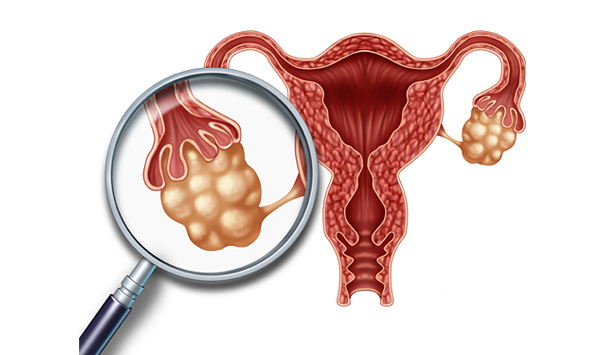
Polycystic ovary syndrome (PCOS) literally means:
“Ovaries with many small follicles and hormones that are out of balance.”
In PCOS:
- The ovaries show many small follicles (like tiny fluid-filled sacs), and
- At the same time,
- Ovulation doesn’t happen regularly (ovulation problems), and
- Male hormones (androgens) are relatively higher than they should be.
An easy way to think of it is:
“Your eggs are supposed to grow and ovulate in a regular rhythm,
but that process keeps getting stuck, and your hormones are thrown off balance.”
2) The “3 out of 2” rule doctors often use
Most clinics use what’s called the Rotterdam criteria to diagnose PCOS.
PCOS is suspected when 2 or more of the following 3 features are present:
- Ovulation problems (irregular or absent periods)
- Your cycle is often longer than 35 days
- You have fewer than 8 periods a year
- You go several months without a period at all
- Signs of high androgens (male hormones)
- Thick, dark hair growing more on the chin, upper lip, chest, or lower belly
- Persistent adult acne that keeps coming back
- Blood tests show slightly elevated androgen levels
- Polycystic appearance of the ovaries on ultrasound
- Many small follicles (often described as “string-of-pearls”) are seen in the ovaries
If two or more of these are confirmed and other hormonal disorders are ruled out,
a doctor can make a diagnosis of PCOS.
ㅁㅁㅁㅁㅁㅁㅁㅁㅁㅁㅁㅁㅁㅁㅁㅁㅁㅁㅁㅁㅁㅁㅁㅁㅁㅁ
2. Why Do Irregular Periods and Acne Happen?
The Main Causes of PCOS
There is no single cause of PCOS.
Instead, several factors combine and create a state where hormones and metabolism both get disrupted.
1) A combination of genes, hormones, and lifestyle
Studies suggest that PCOS is influenced by:
- Family history of PCOS, diabetes, or metabolic syndrome
- Being the type of person who gains weight easily
- Lack of exercise, a high-calorie diet, chronic stress, and poor sleep
When these stack up, your risk of developing polycystic ovary syndrome goes up.
At the same time, hormones produced by the ovaries and the brain (hypothalamus and pituitary gland)
can lose their normal rhythm.
This hormonal imbalance is often accompanied by relatively higher levels of androgens (male hormones),
which is a key feature in PCOS.
2) Insulin resistance and weight gain
One of the most important concepts in PCOS is insulin resistance.
- Insulin is the hormone that helps lower your blood sugar.
- When your body becomes resistant to insulin, the hormone doesn’t work as well.
- To compensate, your body produces even more insulin.
- These high insulin levels can stimulate the ovaries to make more male hormones,
which worsens acne, excess hair growth, and ovulation problems.
People who are overweight — especially with belly-centered weight (abdominal obesity) —
tend to have more insulin resistance and often more severe PCOS symptoms.
That said, this doesn’t mean thin women can’t have PCOS.
There are many women with a normal BMI who still meet all the criteria for PCOS.
3. Could This Be Me?
PCOS Symptom Checklist
If you’re wondering,
“Is this just my natural irregular cycle,
or could this be due to PCOS?”
use the checklist below as a starting point.
1) Period-related symptoms
- Your cycle is often longer than 35 days
- You feel like you have fewer than 8 periods a year
- You’ve had months with no period at all (amenorrhea)
- Your flow is very different from before (much lighter or much heavier)
2) Ovulation problems and fertility
- You don’t really know when you ovulate, and your cycle feels unpredictable
- You’ve been trying to get pregnant for a year or more without success
- You needed ovulation-inducing medication to ovulate in the past
PCOS is one of the most common causes of anovulatory infertility
(when you don’t ovulate regularly).
3) Changes in appearance and body shape
- You’re shaving or removing hair more often on the chin, upper lip, chest, or lower belly
- Your adult acne doesn’t clear and keeps coming back
- You notice your hair is thinning on the crown or the top of your head
- You eat about the same as before, but weight won’t budge and your belly sticks out more
4) Energy, mood, and emotional health
- You often feel tired and heavy
- Changes in your body and skin make you feel less confident
- You frequently worry,
“What if I can’t get pregnant in the future?”
If several of these boxes are checked, it’s worth considering PCOS symptoms
and booking an appointment with a gynecologist or endocrinologist for a proper evaluation.
4. How Do Doctors Diagnose PCOS?
Common Tests and What to Expect
When PCOS is suspected, most clinics follow a similar process.
1) Medical history and physical exam
Your doctor will first ask detailed questions:
- When you had your first period, and how regular your cycle has been since
- How often you’ve had irregular periods or no periods in recent years
- Whether you’re planning pregnancy and any past pregnancies or miscarriages
- Recent weight changes, and any family history of diabetes, high blood pressure, or heart disease
During the physical exam, they may check:
- Your BMI (body mass index) and waist circumference
- The degree of acne, excess hair growth, and hair thinning
2) Blood tests
Typical blood tests look at:
- Female hormones and male hormone (testosterone) levels
- Thyroid function and prolactin (the hormone related to milk production)
- Fasting blood sugar, insulin, and cholesterol / triglycerides
This helps evaluate both hormone imbalance and your metabolic health.
Many guidelines also recommend an oral glucose tolerance test (OGTT) for women with PCOS.
In this test, you drink a sugary liquid and have your blood sugar checked at set intervals.
It is very useful for detecting pre-diabetes and insulin resistance at an early stage.
3) Pelvic or transvaginal ultrasound
Ultrasound is important for looking directly at the ovaries.
Doctors can assess:
- The size of the ovaries
- How many small follicles are present
- Whether there are any other issues in the uterus or ovaries
4) Ruling out other conditions
Several other hormonal conditions can look similar to PCOS, such as:
- Thyroid disorders
- Hyperprolactinemia (high prolactin levels)
- Certain congenital adrenal disorders
Blood tests and clinical evaluation help distinguish PCOS from these other causes.
ㅁㅁㅁㅁㅁㅁㅁㅁㅁㅁㅁㅁㅁㅁㅁㅁㅁㅁㅁㅁㅁㅁㅁㅁㅁㅁ
5. PCOS Treatment and Management
Why You Need Both Medication and Lifestyle Changes
The main goals of PCOS treatment are:
- To reduce current symptoms like irregular periods, acne, and excess hair
- To manage ovulation and fertility if you want to get pregnant
- To lower long-term risks such as diabetes, high blood pressure, and heart disease
1) Lifestyle comes first: PCOS diet and daily habits
One message that keeps appearing across studies is:
Losing just 5–10% of your body weight
can significantly improve your cycle, ovulation, insulin resistance,
and even blood sugar and cholesterol levels.
Of course, that doesn’t mean it’s easy.
But you don’t need a crash diet.
A slow, steady, realistic approach can be very effective.
5 Practical Lifestyle Tips You Can Start Today
- Focus on “better carbs,” not zero carbs
- Cut back on white rice, noodles, white bread, and pastries
- Choose whole grains like brown rice, mixed grains, and oats
- Save soda, sweetened coffee, and juices for occasional treats instead of daily habits
- Walk briskly 30 minutes, 3–5 times a week
- You don’t need a gym membership.
- Try brisk walking around your neighborhood, taking the stairs,
or going for a 20–30 minute walk during lunch or after work.
- Add simple strength training 2–3 times a week
- Squats, lunges, push-ups, and light dumbbell exercises are enough to start.
- Building muscle increases your basal metabolic rate and helps improve insulin resistance.
- Protect your sleep and manage stress
- This part is easy to ignore but incredibly important.
- Late-night phone use, caffeine, and heavy late-night snacks can all disrupt sleep.
- Try setting regular sleep and wake times and creating a calming bedtime routine.
- Track your weight, waist, and menstrual cycles
- A scale, a measuring tape, and a period tracking app are simple but powerful tools.
- Seeing your progress with PCOS management in numbers helps keep you motivated:
“I really am doing something good for my body.”
These lifestyle strategies are not just “extras” —
they are a core part of PCOS treatment, alongside any medication.
2) Medication strategies: depends on your pregnancy plans
The medication plan looks very different depending on whether you want to get pregnant soon.
① If you are not trying to get pregnant yet
- Combined oral contraceptive pills (estrogen + progestin)
- Help regulate your menstrual cycle
- Lower androgen levels, which can improve acne and excess hair
- Anti-androgen medications (e.g., spironolactone)
- Used when excess hair growth or acne is more severe
- Because they can affect a developing fetus,
you must use reliable contraception while taking them
② If you are trying to get pregnant – ovulation induction
For women who want to conceive, doctors often suggest ovulation-inducing medications.
- Many recent guidelines recommend letrozole
as the first-line ovulation induction drug for women with PCOS. - Clomiphene has been used for a long time and is still widely prescribed,
but some studies show letrozole may offer better ovulation and pregnancy rates,
so it is increasingly used as the first choice.
Depending on your response, your doctor may also consider:
- Metformin (to improve insulin resistance)
- Injectable ovulation medications
- IVF (in vitro fertilization) if needed
The exact combination and sequence will be tailored to your situation.
The important point: Never choose or adjust these medications on your own.
Always work with a gynecologist or endocrinologist who understands your full medical history.
6. Why PCOS Matters in the Long Run
Links to Diabetes and Heart Disease
PCOS is not just about “annoying irregular periods and acne in young women.”
Research has shown that women with PCOS have an increased risk of:
- Type 2 diabetes
- High blood pressure, high cholesterol, and metabolic syndrome
- Cardiovascular disease, including heart attacks and strokes
If you go long periods without ovulation and your uterine lining keeps building up without shedding properly,
the risk of endometrial cancer can also increase over many years.
That’s why PCOS management should include more than just
“fixing my period” or “clearing my skin.”
It’s important to keep an eye on:
- Blood sugar
- Blood pressure
- Cholesterol and triglycerides
over the next 10, 20, even 30 years,
and to maintain healthy lifestyle habits for the long term.
7. Key Takeaways & Final Thoughts
Let’s wrap up with a quick summary.
Key Takeaways
- Polycystic ovary syndrome (PCOS) is a very common hormonal and metabolic disorder
among women of reproductive age. - Typical PCOS symptoms include:
irregular or absent periods, infertility, acne, excess hair growth,
weight gain or belly fat, insulin resistance, and blood sugar issues. - Doctors usually diagnose PCOS using:
medical history and physical exam → blood tests (hormones, blood sugar, lipids) → ultrasound,
and rule out other similar conditions. - PCOS treatment combines:
① Lifestyle changes (diet, exercise, sleep, stress management) and
② Medications (birth control pills, anti-androgens, ovulation induction drugs like letrozole, metformin, etc.),
with the exact plan tailored to whether you want to get pregnant. - Over the long term, PCOS is linked to higher risks of
type 2 diabetes, metabolic syndrome, cardiovascular disease, and endometrial cancer,
so it’s important to monitor weight, blood sugar, blood pressure, and cholesterol regularly.
Final Thoughts
The name “polycystic ovary syndrome” can make it sound like
“a scary disease where your ovaries are full of cysts.”
In reality, it’s more accurate to think of PCOS as a
long-term imbalance of hormones and metabolism that affects many parts of your health.
If, while reading this, you thought:
- “My period keeps getting delayed. Is this really okay?”
- “My weight won’t budge and my jawline acne is getting worse…”
then it may be time to do more than just search online and worry.
Consider taking the next step and talking to a gynecologist or endocrinologist
for proper tests and personalized advice.
PCOS is manageable, and many women with PCOS
go on to have healthy pregnancies and healthy lives.
Shifting from
“Why is my body like this?”
to
“How can I understand and take care of my body better?”
is often the most powerful first step in truly taking back control of your health.
Medical Disclaimer
The information in this article is for general educational purposes only
and is not a substitute for professional medical advice, diagnosis, or treatment.
If you have symptoms or concerns that may be related to PCOS or any other condition,
please consult a qualified healthcare provider for an evaluation that’s tailored to your situation.






최근댓글