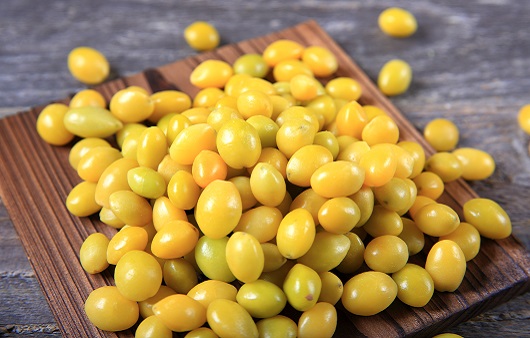
1. Why Are Ginkgo Nuts So Popular in Fall?
Every fall, city streets get covered with golden ginkgo leaves and those strong-smelling ginkgo nuts.
And people often say things like:
“They smell terrible, but I heard ginkgo nuts are really good for you.
I’m more worried about the side effects and how many I can safely eat a day.”
Traditionally, ginkgo nuts have been used as:
- A warming food that helps the body feel less cold
- A home remedy for cough and phlegm
- A seasonal “booster” food in autumn
In the last several years, studies have found that both ginkgo nuts and ginkgo leaf extract may have:
- Antioxidant effects
- Mild support for blood circulation
- Potential benefits for blood vessel health
But there’s one important point most people miss.
- What we usually eat at the dinner table is the ginkgo nut (seed).
- Many studies, especially on the brain and circulation, use ginkgo leaf extract, not the nut itself.
So when we talk about ginkgo benefits, it’s better not to treat ginkgo nuts like a miracle cure.
A more realistic way to think about them is:
“One of many fall foods that may support blood circulation
when eaten in small amounts as part of a balanced diet.”
2. Nutrients in Ginkgo Nuts and What They Actually Do
2-1. What’s Inside a Ginkgo Nut?
Ginkgo nuts contain:
- Carbohydrates
- A small amount of protein and fat
- Minerals such as potassium, phosphorus, and magnesium
- Antioxidant compounds like polyphenols and flavonoids
Because of these components, ginkgo nuts, like other nuts and seeds, may:
- Help reduce oxidative stress (damage from free radicals)
- Play a supporting role in overall blood vessel and cell health
Of course, ginkgo nuts alone won’t treat or cure any disease.
They make more sense as a small part of a healthy eating pattern, not the main treatment.
2-2. Ginkgo Nut Benefits You Can Realistically Expect
Based on research and traditional use, here are the main ginkgo nut benefits you can reasonably expect:
1) Antioxidant and Anti-Inflammatory Support
The antioxidant compounds in ginkgo may:
- Help reduce cell damage from free radicals
- Slightly slow down some aging-related processes
- Provide mild anti-inflammatory support
2) Support for Blood Vessels and Circulation
Ginkgo is often listed as a “circulation-supporting food” because:
- Some components appear to support blood flow and blood vessel function.
- In reality, exercise, weight management, and overall diet are far more important.
- Ginkgo nuts should be seen as a small helper on the side, not the main solution.
3) General Immune and Energy Support
Thanks to their antioxidant compounds and minerals, ginkgo nuts can:
- Play a minor supporting role in immune health
- Help overall energy and recovery when combined with healthy habits
To sum it up:
Ginkgo nuts definitely have potential health benefits,
but they work best as a small, occasional supporting ingredient.
They will not fix every blood vessel or circulation problem on their own.

3. Hidden Risks: Ginkgo Side Effects and Toxic Compounds
When it comes to ginkgo nuts, side effects are just as important as benefits.
Eat too many, and they can become genuinely dangerous.
3-1. Methylpyridoxine (Ginkgotoxin): The Main Toxic Compound
Ginkgo nuts contain a toxic substance called
4′-O-methylpyridoxine (methylpyridoxine, also known as ginkgotoxin).
This compound:
- Has a structure similar to vitamin B6
- Interferes with normal vitamin B6 function in the body
- Can affect the nervous system and trigger seizures or convulsions
Reported ginkgo side effects from eating too many nuts include:
- Nausea, vomiting, stomach pain, diarrhea
- Headache and dizziness
- Full-body convulsions (similar to epileptic seizures)
- In severe cases, loss of consciousness and, very rarely, life-threatening situations
Certain people are especially sensitive even to smaller amounts:
- Children
- Older adults
- Anyone with a history of seizures or epilepsy
3-2. Is It Safe If I Roast Them?
A very common question is:
“If I roast or pan-fry ginkgo nuts, does that remove the toxins?”
Heating does reduce the amount of methylpyridoxine to some extent.
However, the key point is this:
- Cooking does not remove ginkgotoxin completely.
- That’s why:
- Eating ginkgo nuts raw is absolutely unsafe, and
- Even when cooked, you must strictly control how many you eat.
3-3. Ginkgo Also Contains a Small Amount of Cyanogenic Compounds
Ginkgo nuts also contain small amounts of cyanogenic glycosides
(chemicals that can release cyanide in the body).
If someone eats a very large amount at once,
these compounds may cause symptoms similar to cyanide poisoning.
This kind of extreme case is rare and usually happens when:
- A large number of ginkgo nuts are eaten in one sitting, or
- Children accidentally overeat them
Still, it’s easy to exceed a safe ginkgo daily intake when you think:
“A little is fine, so a bit more won’t hurt.”
That’s why counting how many ginkgo nuts you eat is so important.
4. Safe Daily Intake of Ginkgo Nuts (Adults and Children)
Now to the question most people search for:
“How many ginkgo nuts can I safely eat a day?”
Different organizations and sources use slightly different wording,
but the practical recommendations are quite similar.
4-1. Approximate Safe Intake for Adults and Children
Based on multiple sources, these are realistic guidelines:
For Adults
- For roasted ginkgo nuts, aim for no more than 10 nuts per day.
- It’s better not to eat them every single day.
- Think of them as a sometimes food in the fall, not a daily supplement.
For Children
- Limit to 2–5 ginkgo nuts per day, at most.
- Children are smaller and more sensitive to toxins.
- It’s safer not to give ginkgo nuts frequently.
- For babies and toddlers, it’s best to avoid ginkgo nuts entirely.
So far, no study has proven a perfectly safe number like
“X nuts is 100% safe for everyone.”
A practical way to think about it is:
Treat 10 nuts a day for adults and
2–5 nuts a day for children
as an absolute upper limit,
and eat less than that whenever possible.
4-2. How This Looks in Real Life
Numbers can feel abstract, so here are some easy ways to apply them:
- When you pan-fry or roast ginkgo nuts for a family side dish:
- Roast about 20–30 nuts total for the whole family.
- Two adults can each eat about 8–10 nuts,
- A child can have 2–3 nuts set aside on a separate plate.
- When you serve ginkgo nuts as a bar snack:
- Put no more than 10 nuts in a small dish for yourself.
- Decide in advance: “I’m only eating what’s on this plate.”
By counting the nuts before they go on the plate,
you can easily stay within a safe ginkgo daily intake
without having to think too hard.

5. How to Cook Ginkgo Nuts Safely
…and What About Street Ginkgo?
To enjoy ginkgo nut benefits while lowering the risk of side effects,
you need to know how to cook ginkgo nuts safely.
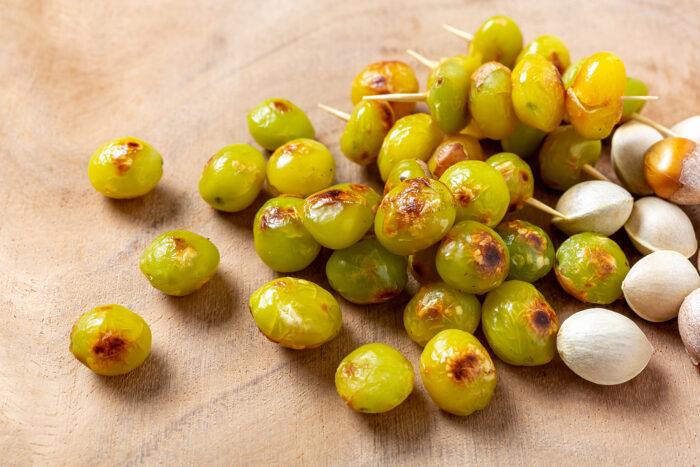
5-1. How to Pan-Fry Ginkgo Nuts
- Remove the hard outer shell and rinse the nuts. Let them dry slightly.
- Place them in a heavy pan and cook over low to medium heat.
- Shake the pan often so they cook evenly.
- When the shells crack and the pale green nuts puff up and turn lightly golden, they’re done.
- Avoid cooking them until they’re very dark brown or burnt;
that can create bitterness and undesirable compounds.
Turn off the heat when they’re just lightly golden and let the residual heat finish the cooking.
5-2. How to Cook Ginkgo Nuts in an Air Fryer
- Place cleaned ginkgo nuts on a piece of parchment or foil.
- Cook at about 350°F (180°C) for 7–10 minutes.
- Shake the basket once in the middle for even cooking.
- Stop when the shells are cracked and the nuts look cooked,
not blackened or overly browned.
5-3. How to Store Cooked Ginkgo Nuts
- If you roasted too many, peel them and store in an airtight container.
- In the fridge, use them within 2–3 days.
- For longer storage, freeze and use within about 1 month.
5-4. Is It Safe to Pick Up Ginkgo Nuts from the Street?
If you live in a city, you’ve probably seen fallen ginkgo nuts and wondered:
“Can I just pick them up, wash them, and eat them?”
Street ginkgo nuts may be exposed to:
- Car exhaust
- Road dust
- Heavy metals from the soil
Some surveys have shown that in many areas,
heavy metal levels in street ginkgo are within safety limits,
but there are also locations where contamination is higher.
The real problem is:
- You can’t tell which area’s ginkgo nuts are clean or contaminated
just by looking at them.
So from a practical viewpoint, it’s safest to:
Avoid eating ginkgo nuts picked up from the street,
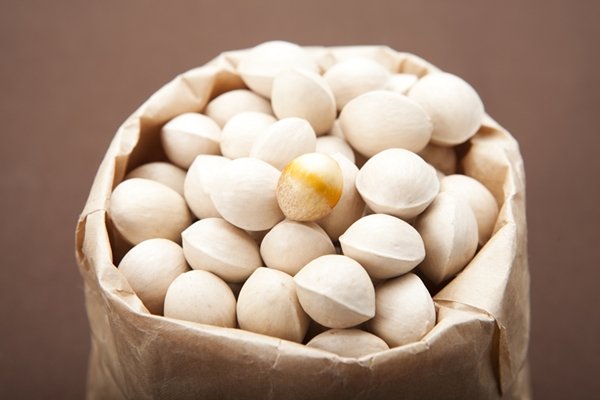
and instead buy clean, sorted ginkgo nuts
from a store or market.
6. Who Should Be Extra Careful?
- 5 Practical Everyday Tips
6-1. People Who Need to Be Especially Cautious with Ginkgo Nuts
1) Children and Teenagers
- They have lower body weight and are more sensitive to toxins.
- Keep them well below the 2–5 nuts per day guideline.
- Babies and toddlers are better off not eating ginkgo nuts at all.
2) People with a History of Seizures or Epilepsy
- Methylpyridoxine (ginkgotoxin) can lower the seizure threshold.
- If you have a history of seizures or epilepsy, it’s safest to
avoid ginkgo nuts or keep intake extremely low,
and talk to your doctor before consuming them regularly.
3) Pregnant or Breastfeeding Women
- Safety data on ginkgo nuts and ginkgo leaf extract during pregnancy
and breastfeeding is limited. - During these periods, it’s wiser to avoid “questionable” foods
when they’re not necessary for nutrition. - There are many other safe and nutritious foods to choose from.
4) People Taking Blood Thinners or Antiplatelet Drugs
- If you’re taking medications like warfarin or aspirin,
combining them with high doses of ginkgo leaf extract plus ginkgo nuts
may increase bleeding risk. - Eating a few nuts now and then as a side dish is usually less of a concern,
but you still want to be cautious and keep the amount small.
6-2. Five Practical Tips You Can Use Right Away
1) Set a “one-plate limit” for ginkgo nuts.
- For adults, place no more than 10 roasted ginkgo nuts on your plate.
- Even if you want more, decide that “this plate is the limit for today.”
- This simple rule makes it easy to stay within a safe daily intake.
2) Don’t make ginkgo your regular bar snack.
- In the fall, it’s easy to reach for ginkgo nuts every time you drink.
- That habit quickly adds up.
- Try to keep ginkgo nuts as an occasional treat,
not something you eat every time you have alcohol.
3) Don’t overestimate ginkgo benefits.
- Ginkgo benefits are supportive, not magical.
- For blood pressure, cholesterol, and circulation,
the basics still matter most:- Regular exercise
- Weight management
- Lower sodium intake
- A diet rich in vegetables and whole grains
- Ginkgo nuts are just a small supporting actor, not the star of the show.
4) Avoid “double dosing” with ginkgo supplements plus heavy ginkgo eating.
- If you already take a ginkgo leaf extract supplement,
it’s better not to also eat large amounts of ginkgo nuts,
especially on a daily basis.
5) For kids, treat ginkgo as a “tasting experience,” not a regular snack.
- Let children try 2–3 nuts occasionally,
but avoid giving them ginkgo nuts frequently or in large amounts. - Always keep ginkgo nuts out of reach of young children
to prevent accidental overconsumption.
6-3. Key Takeaways and Final Thoughts
Here are the main points to remember about ginkgo nuts:
- Ginkgo benefits
- May provide mild antioxidant, circulation, immune,
and fatigue support when eaten in small amounts.
- May provide mild antioxidant, circulation, immune,
- Ginkgo side effects
- Because of methylpyridoxine (ginkgotoxin),
eating too many ginkgo nuts can cause nausea, vomiting, diarrhea,
dizziness, seizures, or even loss of consciousness in severe cases.
- Because of methylpyridoxine (ginkgotoxin),
- Safe ginkgo daily intake
- Adults: Up to about 10 roasted ginkgo nuts per day
- Children: 2–5 nuts per day or less, and not frequently
- How to eat ginkgo nuts safely
- Always cook them thoroughly, never eat them raw.
- Avoid burning them when pan-frying or using an air fryer.
- Try not to eat ginkgo nuts picked up from the street.
Buy cleaned, food-grade ginkgo nuts instead.
In one sentence:
Ginkgo nuts are a fall seasonal food that can act like a mild “health booster” in small amounts,
but they quickly turn into a toxin if you overeat them.
Enjoy a few ginkgo nuts in your soups, stir-fries, or as a small side dish in autumn,
but always keep an eye on the portion size and your overall lifestyle—
that’s what truly protects your blood vessels and long-term health.
Medical Disclaimer
This article is for general health information and education only.
It is not a substitute for professional medical advice, diagnosis, or treatment.
If you have symptoms, medical conditions, or questions about ginkgo nuts and your medications,
please consult your doctor or a qualified healthcare professional.






최근댓글