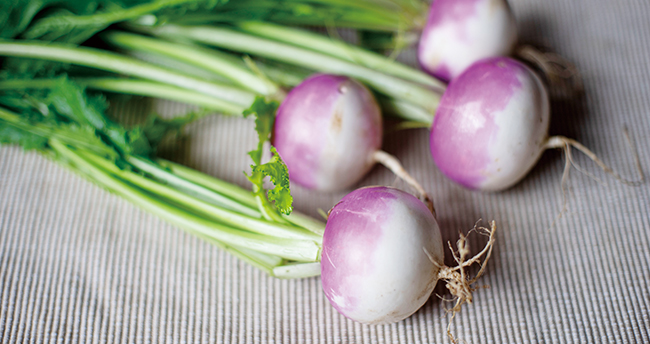
1. Why Are Turnips Getting Attention Again?
“I eat radishes all the time, but turnips? Aren’t they just a seasonal kimchi ingredient?”
Many people think of turnips as a once-in-a-while winter vegetable.
But lately, turnips are coming back into the spotlight as a gut-friendly root vegetable that may also support immunity and cardiovascular health.
Turnips belong to the Brassica family—the same group as cabbage, radish, and broccoli.
This family of vegetables is naturally rich in:
- Vitamin C
- Dietary fiber
- Potassium
- Antioxidants like polyphenols and glucosinolates
Because of this, many studies have linked Brassica vegetables with:
- A lower risk of cardiovascular disease
- A reduced risk of certain cancers
That doesn’t mean “eating turnips will cure disease.”
However, if you add turnips as one of your regular everyday vegetables,
they can be a smart choice to support digestion, gut health, immunity, and blood vessels.
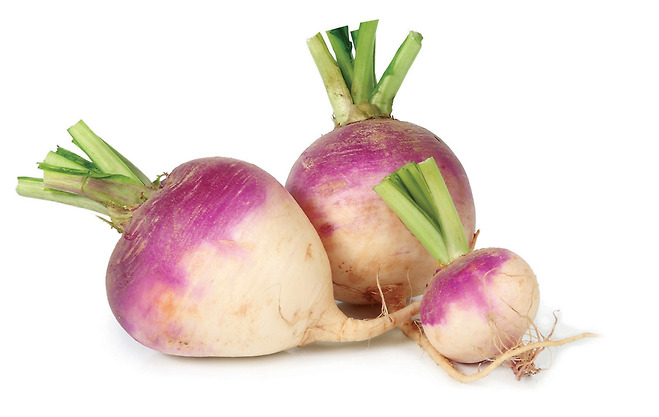
2. Turnip Nutrition at a Glance
Before we get into turnip benefits and side effects, let’s quickly look at what kind of vegetable a turnip actually is.
1) What Exactly Is a Turnip?
Turnips are:
- A Brassica vegetable
- Recognizable by their round white root and leafy green tops
- Commonly used in dishes like:
- Turnip kimchi
- Pickled turnips
- Turnip greens (as a side dish)
- Braised or roasted turnips
2) Key Turnip Nutrition Facts (Per 100 g, Approximate)
Nutritional values can vary by variety and growing conditions, but in general:
- Low in calories (great for weight management)
- Rich in vitamin C
- Contains dietary fiber, which supports gut health
- Provides potassium, which helps balance sodium and support healthy blood pressure
- Also contains smaller amounts of calcium, magnesium, and antioxidant compounds
Turnip greens and the upper part of the root tend to have even more vitamin C.
So when you buy turnips, don’t throw away the greens—they’re a nutritious bonus you can cook and enjoy.
3. 10 Turnip Benefits
From Digestion and Immunity to Heart Health
Now let’s break down turnip benefits into 10 easy-to-understand points.
I’ll keep the explanations simple and practical so you can decide how turnips might fit into your routine.
1) Gentle Support for Digestion
If you often feel:
- Bloated after meals
- Uncomfortably full
- Like your food is “sitting” in your stomach
adding turnip dishes to your meals may help.
Because turnips contain water and dietary fiber, they can help reduce the overall burden on your stomach and support smoother digestion.
Warm, cooked turnips (like in soups or braises) are usually easier to tolerate for people who:
- Have a sensitive stomach
- Often feel cold or have a “weak” digestion
This is one of the reasons many people say turnip benefits their digestive comfort.
2) Easing Constipation and Supporting Gut Health
The fiber in turnips helps:
- Increase stool bulk
- Stimulate bowel movements
which can support more regular bowel habits and help with mild constipation.
However, if you rarely eat vegetables and suddenly start eating a lot of turnips at once, you may notice:
- Gas
- Bloating
- Abdominal discomfort
In that case, it’s better to start with a small amount and increase gradually so your gut has time to adjust.
3) Antioxidant and Anti-Inflammatory Support
Like other Brassica vegetables, turnips contain:
- Vitamin C
- Polyphenols
- Glucosinolates (a sulfur-containing compound—think of it simply as a potential antioxidant)
These substances can help your body:
- Reduce excess oxidative stress (too many “free radicals”)
- Calm low-grade, chronic inflammation
They don’t act like a drug, but over time, a diet rich in antioxidant vegetables like turnips can help create a healthier background environment for:
- Aging
- Blood vessel health
- Chronic inflammatory conditions
4) Immune Support and Seasonal Wellness
Because turnips are a good source of vitamin C, they support the normal function of immune cells.
Turnip greens contain even more vitamin C, so eating dishes like:
- Turnip kimchi
- Lightly cooked turnip greens
on a regular basis can be a simple way to help with:
- Everyday immune support
- Winter wellness and fatigue recovery
5) Heart and Blood Pressure Support
Several studies suggest that people who eat more Brassica vegetables such as broccoli, cabbage, kale, and turnips tend to have a lower risk of heart disease and stroke.
This is likely thanks to the combination of:
- Potassium (helps balance sodium)
- Fiber (supports cholesterol and blood sugar balance)
- Antioxidants (support blood vessel health)
If you’re concerned about high blood pressure or atherosclerosis, it can be helpful to regularly include turnips and other Brassica vegetables in your weekly meal plan.
6) Helpful for Blood Sugar Balance
Turnips are:
- Not extremely high in carbohydrates
- A source of fiber
If you reduce your portion of refined carbs (like white rice or bread) and add braised or roasted turnips instead, it can help slow down the rise of blood sugar after meals.
Turnips are not a replacement for diabetes medication, but for people with:
- Diabetes
- Prediabetes
- Elevated fasting blood glucose
they can be a better side dish choice compared to many refined carb options.
7) Turnips for Weight Management
If you think, “I’m hungry, but I really need to cut some calories,” turnips can be a useful ally.
Turnips are:
- Low in calories
- High in water
- Crunchy or pleasantly soft (depending on how you cook them)
which helps increase fullness and satisfaction without adding many calories.
For example:
- Slightly reduce your usual portion of rice or bread
- Add roasted turnips or a turnip salad on the side
You’ll often feel just as full while eating fewer total calories.
That’s one way to use turnip benefits for weight loss in real life.
8) Liver Detox and Metabolic Support
Glucosinolates in Brassica vegetables are broken down in the body into active compounds that can:
- Stimulate certain detoxification enzymes in the liver
In simple terms, they help your liver do its job of processing:
- Waste products
- Environmental toxins
- By-products of normal metabolism
Eating turnips regularly, along with a variety of other vegetables, is a gentle way to support overall metabolic health.
9) Potential Cancer-Protective Effects (Especially Digestive Cancers)
Observational studies have found that higher intake of Brassica vegetables may be associated with a lower risk of cancers of the digestive tract, such as stomach and colon cancer.
This does not mean:
“If you eat a lot of turnips, you’ll never get cancer.”
Rather, it suggests that a diet rich in vegetables—turnips included—may play a supportive role in reducing long-term cancer risk as part of an overall healthy lifestyle.
10) Possible Kidney Support (Within Limits)
Animal and experimental studies have reported kidney-protective effects from turnip extracts.
However, large, high-quality human studies are still limited.
So instead of treating turnips as a “kidney medicine,” it’s more realistic to:
- Use turnips as one part of a balanced, kidney-friendly diet
- Stay within the guidelines your healthcare provider gives you, especially if you already have kidney disease

4. Turnip Side Effects and Who Should Be Careful
Whenever a food has strong health benefits, it’s important to also understand possible side effects and precautions.
Many people specifically ask about turnip side effects related to the thyroid.
1) If You Have Thyroid Problems
Turnips, like other Brassica vegetables, contain substances called goitrogens.
Goitrogens can interfere with iodine uptake, which may affect thyroid hormone production in sensitive individuals, especially when:
- Iodine intake is low
- Brassica vegetables are eaten in large amounts, mostly raw
For people with:
- Hypothyroidism (low thyroid function)
- Thyroid nodules
- A history of thyroid cancer surgery
it’s best to avoid consuming large amounts of raw turnips or turnip juice every day.
However, if your iodine intake is adequate and you:
- Eat turnips in moderate amounts
- Prefer them cooked as a side dish
most people can enjoy turnips without major issues.
In short, the key point for “turnip side effects and thyroid caution” is:
Avoid overdoing raw turnip or turnip juice every day
and choose moderate, mostly cooked portions instead.
2) If You Have a Sensitive Gut or Get Gassy Easily
If you suddenly eat a lot of high-fiber vegetables, including turnips, you may notice:
- More gas
- Bloating
- A heavy feeling in your abdomen
If your gut is very sensitive, start slowly:
- Begin with about ⅓–½ of a small turnip per day
- Increase the amount little by little every few days
This gives your digestive system time to adapt to the extra fiber.
3) If You Have Kidney Disease and Need to Limit Potassium
Turnips contain potassium, which is normally a good thing for blood pressure and heart health.
But if you have chronic kidney disease and your healthcare provider has told you to limit potassium, you should:
- Discuss turnip intake with your doctor or dietitian
- Adjust the amount and cooking method based on professional advice
4) Allergies and Sensitivities
In rare cases, people who are allergic to:
- Cabbage
- Radish
- Broccoli
may also react to turnips.
If you notice:
- Itching or tingling in your mouth or lips
- Hives
- Shortness of breath
after eating turnips, stop eating them and seek medical attention.
5. How to Eat Turnips
Daily Intake, Cooking Tips, and Easy Turnip Recipes
Let’s put this into practice and talk about how to eat turnips in a realistic way.
1) How Much Turnip per Day Is Reasonable?
There is no official, strict guideline that says:
“You should eat exactly X grams of turnip per day.”
Human studies specifically on “turnip dosage” are limited, so we can’t give a perfectly precise number.
However, in everyday life, you can think of it like this:
- Count 1 small turnip as about 70–80 g
- Eating up to one small turnip a day,
- On 3–4 days a week,
as a side dish is generally a comfortable range for most healthy people.
Another way to think about it:
- Aim for about 400 g (roughly 5 servings) of vegetables per day in total
- Let turnips make up one of those side dishes
That way, you’re not overdoing it, but you’re still getting meaningful turnip benefits.
2) Eating Turnips Raw (Salads and Slaws)
You can slice turnips thinly and enjoy them:
- In fresh salads
- As a crunchy slaw
They have a mild sweetness and a gentle peppery note.
However, if you’re worried about your thyroid or you have a very sensitive gut, it’s best to:
- Keep raw turnip portions small
- Get most of your turnips cooked instead
3) Eating Turnips Cooked (Gentle on the Stomach and Thyroid)
Cooking methods such as:
- Blanching
- Steaming
- Boiling
- Braising
- Roasting
can make turnips easier on your stomach and may reduce goitrogen content.
So, if you want a one-line rule for how to eat turnips:
“Prefer cooked turnips, and enjoy raw turnips in small amounts.”
That’s the most practical and balanced approach for most people.
4) Simple Turnip Recipe Ideas
1) Turnip “Kimchi” or Lightly Pickled Turnips
- A great way to boost vitamin C and fiber during colder months
- Keep the seasoning moderate in salt
- Enjoy as a side dish with rice, grain bowls, or even noodles
2) Turnip Salad
- Slice turnips very thinly
- Toss with:
- Olive oil
- Lemon juice or vinegar
- A pinch of salt and pepper
You get a bright, refreshing salad that pairs well with heavier main dishes.
3) Turnip Pickles
- Make a simple brine with vinegar, water, sugar, and salt
- Add sliced turnips and let them sit in the fridge
- These pickles make a perfect palate cleanser next to fried or fatty foods.
4) Braised or Roasted Turnips
- Simmer turnips with soy sauce, garlic, and a touch of sesame oil for a savory side
- Or roast them with a little olive oil in the oven or air fryer
Both versions are:
- Satisfying
- Great as a lower-calorie side
- Easy to use as part of a turnip weight-loss meal plan
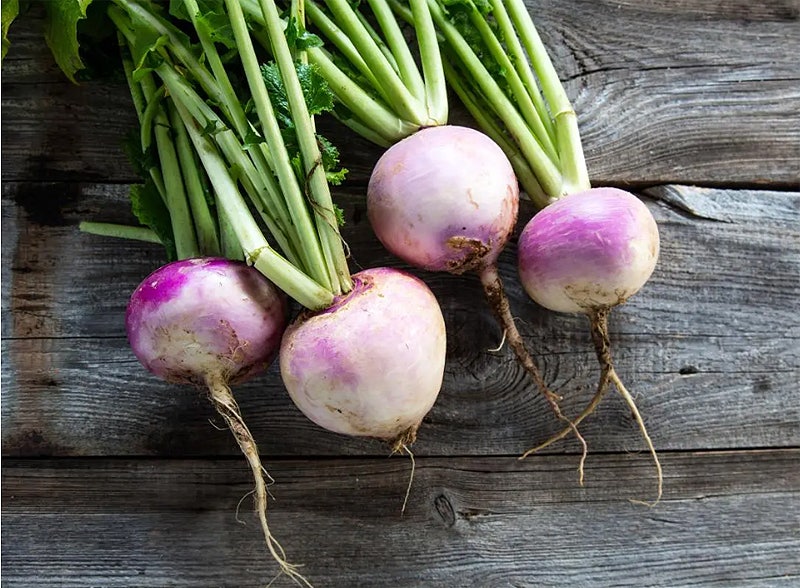
6. How to Choose and Store Turnips
Freshness, Fridge Storage, and Freezing Tips
1) How to Choose Fresh Turnips
Look for turnips that:
- Have smooth skin without dark spots, mold, or cracks
- Feel heavy and firm in your hand
- Have green tops (if attached) that are:
- Bright in color
- Not wilted or slimy
Those are usually the freshest and tastiest.
2) Turnip Storage Guide (Fridge and Freezer)
Fridge Storage
When you get home:
- Separate the roots and greens.
For the roots:
- Gently brush off any dirt
- Wrap in a paper towel
- Place in a zip-top bag
- Store in the vegetable drawer of your fridge
They usually stay crisp for about 1–2 weeks.
For the greens:
- If you won’t use them right away,
- Lightly blanch them in boiling water
- Squeeze out the excess moisture
- Portion them into small packs and freeze
Later, you can use them in soups, stews, or as a side dish.
Freezer Storage
- Slice turnips into small pieces
- Blanch briefly in boiling water
- Drain and pat dry
- Portion into freezer bags
Frozen turnips can be added directly to:
- Soups
- Stews
- Stir-fries
This is one of the easiest turnip storage tips for busy days.
3) Simple Everyday Turnip Tips You Can Start Today
- Start with One Small Side Dish, 2–3 Times a Week
Instead of forcing yourself to eat turnips every day,
just add turnip kimchi, braised turnips, or a turnip salad a few times a week. - Cook Them If You’re Worried About Thyroid or Digestion
If thyroid or gut health is a concern,
skip the daily raw turnip juice and
focus on soups, stews, braises, and roasted turnips instead. - Mix Turnips with Other Vegetables
Don’t make turnips the only star.
Combine them with broccoli, onions, carrots, and other colorful vegetables
to enjoy a wide range of nutrients in one meal. - Swap One Kimchi or Pickle for a Turnip Version
If you already eat some kind of pickle or fermented side daily,
try swapping one of them for a turnip-based option.
You’ll get turnip benefits without adding extra cooking time. - Adjust Your Portion to Your Health Conditions
If you have thyroid or kidney issues,
don’t completely ban turnips, but
adjust the amount and cooking method based on your doctor’s advice.
✅ Key Takeaways
Turnip benefits include:
- Supporting digestion and gut health
- Helping with everyday immune support and seasonal wellness
- Contributing to heart and blood pressure health
- Providing antioxidant and anti-inflammatory support
- Fitting well into weight-loss and metabolic-friendly meal plans
Turnip side effects to remember:
- If you have thyroid problems, avoid eating large amounts of raw turnips or turnip juice every day
- If your gut is sensitive, start with small portions and increase slowly
- If you have kidney disease and need to limit potassium, watch your portions and consult your care team
How to eat turnips and how much:
- About one small turnip (70–80 g)
- On 3–4 days a week, as part of your vegetable side dishes
- Prefer cooked turnips, and enjoy raw ones in small amounts
Turnip storage and recipe ideas:
- Separate roots and greens; store in the fridge and freeze blanched portions for later
- Use turnips in kimchi-style dishes, salads, pickles, braises, and roasts
- Think of them as a versatile, everyday vegetable, not just a seasonal ingredient
Medical Disclaimer
This article is for general health information and educational purposes only.
It is not intended to diagnose, treat, cure, or prevent any disease.
If you have specific symptoms, medical conditions, or questions about your health,
please consult a qualified healthcare professional for personalized advice.






최근댓글