
1. Why Are We Seeing Chaga Mushroom Everywhere Lately?
“I’m tired all the time and seem to catch every cold. Should I try chaga mushroom?”
“My friend who has cancer drinks chaga every day. Does it really help?”
You’ve probably heard questions like this at least once.
Chaga mushroom has been used for centuries in places like Russia and Northern Europe, mainly as a tea.
In recent years, it’s become popular in Korea and around the world alongside keywords like:
- Immune support
- Antioxidant
- Blood sugar and blood pressure
- Cancer support
Because of that, interest in chaga mushroom benefits has grown rapidly.
But in reality,
- How far do those chaga mushroom benefits actually go?
- What kind of chaga mushroom side effects should you be aware of?
- And what is the safest, most realistic way to take chaga mushroom?
Many people still don’t know the answers clearly.
In this post, we’ll walk through chaga mushroom benefits, chaga mushroom side effects, and how to take chaga safely in a simple, practical way.
If you’re wondering, “Is chaga right for me, and how much should I take?”
Let’s go through it calmly, step by step.
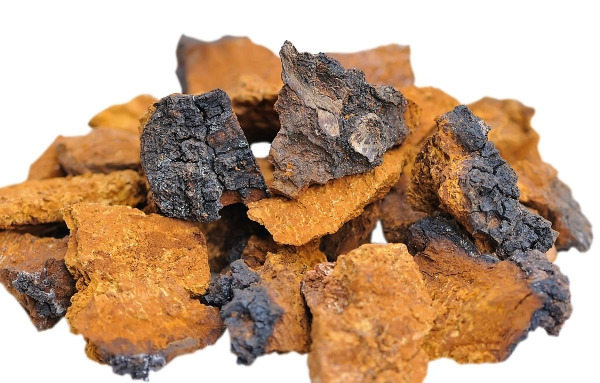
2. What Is Chaga? A Black Mushroom That Grows on Birch Trees
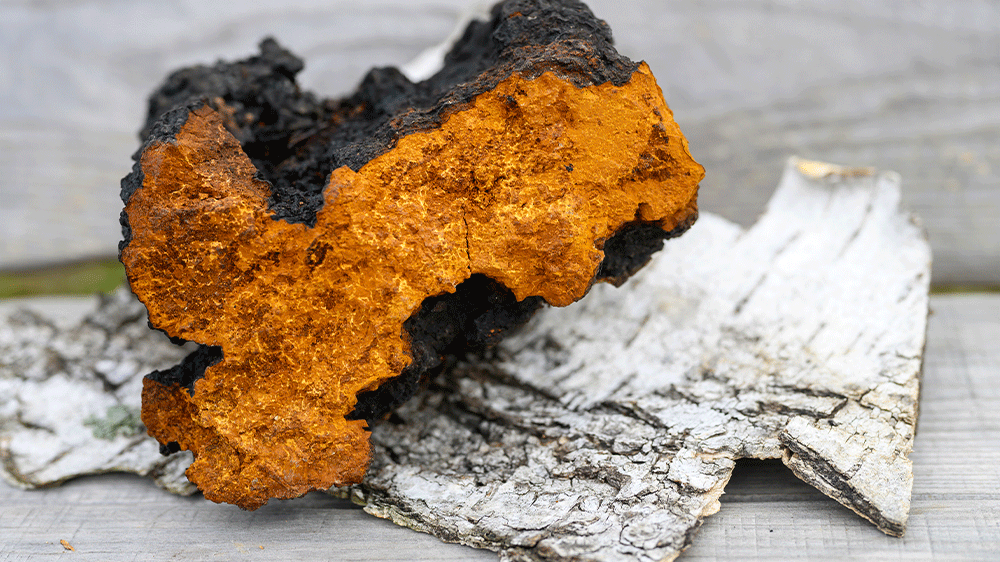
Chaga mushroom (Chaga, Inonotus obliquus) is a medicinal mushroom that grows on birch trees.
On the outside, it looks like a black, burnt lump of charcoal.
On the inside, it has a deep brown–orange color.
Key components found in chaga include:
- Polysaccharides (especially beta-glucans): linked to immune cell activity
- Polyphenols and flavonoids: strong antioxidant effects
- Triterpenoids (such as betulinic acid): studied for anti-inflammatory and potential anti-cancer effects
- Various minerals and vitamins
Studies published over the last five years suggest that chaga extract may:
- Reduce inflammation
- Decrease oxidative stress and protect cells from damage
- Positively influence blood sugar, blood lipids, and blood pressure markers
However, most of this data comes from small studies, animal experiments, or test-tube (in vitro) research.
Large, long-term clinical trials in humans are still lacking.
That’s an important point to keep in mind as you read about chaga mushroom benefits.
3. Chaga Mushroom Benefits – How Much Can You Really Expect?
3-1. Immune Support and Inflammation Control
When people think of chaga, the first word that often comes to mind is “immunity.”
In animal and lab studies, chaga extract appears to:
- Help regulate the activity of immune cells such as macrophages and T cells
- Reduce excessive inflammatory responses in the body
Because of this, many articles and advertisements highlight “immune support” and “anti-inflammatory effects” as key chaga mushroom benefits.
That said, we still don’t have large, clear human trials proving everyday effects like:
- “You’ll catch fewer colds”
- “Your immunity will dramatically improve”
So for now, it’s more realistic to view chaga as a supportive, complementary tool, not a magic immune booster.
3-2. Antioxidant and Anti-Aging–Related Benefits
Chaga is also rich in antioxidant compounds, including:
- Polyphenols
- Melanin
- Flavonoids
These compounds help reduce reactive oxygen species (ROS) and ease oxidative stress on cells.
Multiple studies have shown this antioxidant activity in various experimental models.
Thanks to this, many articles mention chaga in the context of:
- Slowing aspects of aging
- Supporting blood vessel (vascular) health
- Helping protect skin and cells from oxidative damage
Of course, chaga alone won’t suddenly stop aging.
But as part of a broader antioxidant-focused diet and lifestyle, it may play a small supportive role.
3-3. Blood Sugar, Blood Pressure, and Cholesterol
Another big reason people reach for chaga mushroom is concern about diabetes and high blood pressure.
When we look at the research as a whole:
- In animal studies, chaga extract has been shown to lower blood sugar and improve insulin resistance.
- Some studies suggest that it may lower cholesterol and triglycerides.
- There are also signals that it could help improve certain blood pressure–related markers.
That’s why you’ll often see the claim:
“Chaga mushroom is good for blood sugar and blood pressure.”
However, current evidence is not strong enough to replace medication.
We do not have sufficient, large clinical trials showing that chaga alone can control diabetes or hypertension.
So in practice:
- If you have diabetes or high blood pressure, your priority should still be medication, diet, and exercise.
- Chaga should be seen as a possible add-on, not a standalone treatment.
3-4. Potential Anti-Cancer Support
If you search for chaga, you’ll quickly find phrases like “anti-cancer mushroom.”
In test-tube and animal studies, certain compounds in chaga have:
- Inhibited the growth of cancer cells
- Shown stronger anti-tumor effects when combined with some chemotherapy agents
These results are scientifically interesting, but there are important limitations:
- Human studies are still small and limited in number.
- We don’t yet have the kind of evidence needed to say that chaga can replace standard cancer treatments.
So at this stage, the most accurate way to think about it is:
- Chaga mushroom cannot replace cancer treatment.
- At best, and only under medical guidance, it may be considered as a potential complementary option during cancer care.
4. Chaga Mushroom Side Effects – Pay Special Attention to Your Kidneys
Now let’s talk about the most important part:
chaga mushroom side effects.
Just because something is “natural” doesn’t automatically mean it’s safe.
4-1. Oxalates and Kidney Damage Risk
Chaga can contain high levels of oxalates (oxalic acid).
Oxalates, when they accumulate in the body, can put a strain on the kidneys.
There have been reported cases where people:
- Took high doses of chaga powder for several months,
- Developed acute or chronic kidney damage,
- And in some cases, required dialysis because of severe kidney failure.
Because of this, taking large amounts of chaga for a long time is risky, especially for your kidneys.
4-2. Who Should Be Extra Careful with Chaga?
If any of the following applies to you, you should be particularly cautious about chaga mushroom side effects:
- Existing kidney disease
- Chronic kidney disease
- Kidney failure
- Kidney stones
- Taking blood thinners or antiplatelet drugs
- For example, warfarin or aspirin-type medications
- Chaga may potentially affect blood clotting and increase bleeding risk.
- Taking diabetes medications (blood sugar–lowering drugs)
- Since one of the potential chaga mushroom benefits is lowering blood sugar,
combining it with diabetes medication might, in theory, increase the risk of low blood sugar (hypoglycemia).
- Since one of the potential chaga mushroom benefits is lowering blood sugar,
- Taking immunosuppressants (e.g., after organ transplant)
- Chaga’s immune-modulating effects might interfere with how these drugs work.
- Pregnant or breastfeeding women, infants, children, and teens
- There is almost no solid safety data for these age groups,
so chaga is generally not recommended.
- There is almost no solid safety data for these age groups,
There are also reports suggesting that taking high doses of chaga together with high-dose vitamin C over time may further increase the risk of oxalate buildup and kidney issues.
This combination warrants extra caution.
5. How to Take Chaga Mushroom – Powder, Tea, and Safe Use
Now let’s organize the practical part:
how to take chaga mushroom safely.
There is no officially established “standard dose,” but we can outline a reasonable, conservative range based on studies and product guidelines.
5-1. How to Take Chaga Powder
- Water temperature
- Rather than boiling-hot water, many sources recommend mixing chaga powder into lukewarm or warm water (about 36–60°C / 97–140°F).
- Amount per serving
- A common starting point is around 1 small teaspoon (about 1 g) of chaga powder,
then adjusting within the product’s recommended dose range.
- A common starting point is around 1 small teaspoon (about 1 g) of chaga powder,
- How many times per day?
- Many people start with 1–2 times per day and see how their body responds.
- When to drink it?
- It’s often suggested to drink it on an empty stomach or about 30 minutes before meals.
And here’s an especially important tip:
Try not to mix a large amount of chaga powder into water once
and sip it throughout the whole day.
If chaga sits in water for a long time, its components can change or degrade.
For better potency and safety:
- Mix only what you’ll drink at that moment.
- Drink it soon after preparing, rather than letting it sit for hours.
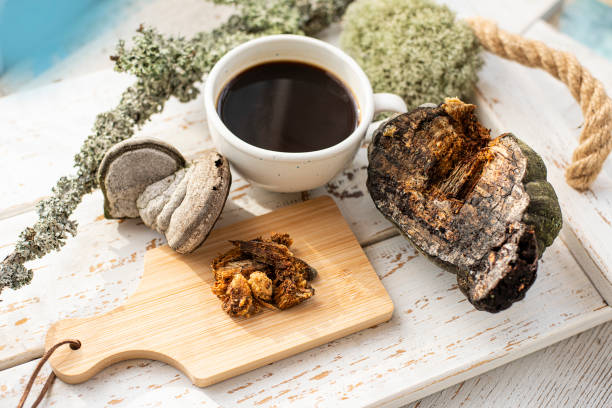
5-2. How to Brew Chaga Tea (Tea Bags or Chaga Chunks)
If you use tea bags or dried chaga chunks, you can prepare it like this:
- Prepare about 300–500 ml (10–17 oz) of water.
- Add 1–2 tea bags or a small handful of chaga chunks.
- Simmer gently over low heat for 10–20 minutes,
or pour slightly cooled boiled water over the chaga and steep for 10–20 minutes. - Drink 1–2 cups a day, rather than drinking a very large amount.
Avoid brewing chaga extremely strong and drinking large volumes every day for long periods.
That may increase the risk of side effects, especially for your kidneys.
5-3. Storage and Shelf Life
- Chaga powder and dried chunks
- Store them in a cool, dry place, away from direct sunlight.
- Keep them in an airtight container to avoid moisture and air exposure.
- Brewed chaga tea
- It’s best to drink it the same day, or within 1–2 days at most.
- Refrigerate any leftover tea.
- Avoid keeping brewed chaga at room temperature for long periods,
as both hygiene and component stability become issues.
6. How to Choose a Good Chaga Product & 4 Practical Tips
6-1. How to Choose Chaga Products Wisely
When shopping for chaga, keep these points in mind:
- Clear origin (country of origin) and manufacturer information
- Availability of lab test results for heavy metals, radiation, and microbial contamination
- Avoid brands that promise “cancer cure,” “miracle cure,” or “cures everything”
- Among capsules, powders, and liquid extracts, look for products with:
- Well-documented active ingredient content
- Clear labeling of dosage and extract concentration
Even these basic checks can significantly reduce unnecessary risk
and help you enjoy chaga mushroom benefits more safely.
6-2. Four Practical Tips You Can Use Right Away
Tip 1. Think of Chaga as Support, Not as a Drug
- Based on current evidence, chaga mushroom is best viewed as a complementary option, not a primary treatment.
- Please continue your regular medical treatment and healthy lifestyle,
and let chaga sit on top of that as a small helper.
Tip 2. Start Low and Try It for a Short Period First
- Instead of jumping straight into a high daily dose,
try a low amount for 2–4 weeks first. - Watch for changes such as swelling, changes in urination, or extreme fatigue.
If anything feels off, stop and get checked, especially if kidney issues are a concern.
Tip 3. Pair Chaga with an Antioxidant-Rich Diet
Rather than relying only on chaga, try to build an overall antioxidant lifestyle:
- Dark-colored vegetables (like broccoli, spinach, eggplant)
- Berries and seasonal fruits
- Nuts and other mushrooms (like shiitake or oyster mushrooms)
When these are combined with moderate use of chaga,
the overall effect on your health is likely to be more meaningful.
Tip 4. Check for Overlap with Other Supplements
- If you’re already taking other mushroom blends, strong antioxidant supplements, or high-dose vitamin C,
adding chaga on top may push your intake into the “too much” zone. - It’s worth reviewing all your supplements together
to make sure you’re not accidentally overloading your body.
7. Final Summary – A Simple Way to Think About Chaga Mushroom
Let’s wrap up the key points about chaga mushroom benefits, side effects, and how to take it.
1. Chaga mushroom benefits
- Chaga shows antioxidant, anti-inflammatory, immune-modulating effects in many experimental studies.
- There are signals that it may help with blood sugar, blood pressure, blood lipids, and possibly support cancer treatment.
- However, large, long-term human trials are still lacking,
so it’s safest to view chaga as a supportive tool for overall health, not a cure or standalone treatment.
2. Chaga mushroom side effects
- Because of its high oxalate content, chaga has been linked to kidney damage in some case reports.
- People with existing kidney disease, those on blood thinners, diabetes medications, or immunosuppressants,
as well as pregnant or breastfeeding women and younger individuals,
should be especially careful or avoid chaga altogether.
3. How to take chaga safely
- A common pattern is to mix a small amount of chaga powder in warm water once or twice a day.
- Brew chaga tea gently and avoid drinking very strong, large quantities every day for long periods.
- Prepare only what you need at that moment and avoid letting it sit too long.
4. How to use chaga wisely in real life
- Choose products carefully, based on origin, lab testing, and clear labeling.
- Keep your expectations realistic:
chaga is there to support your diet, lifestyle, and medical treatment, not replace them.
In short:
Chaga mushroom can be a comforting, health-conscious choice for some people—
a warm cup that might give your body a little extra support.
But it works best when you:
- Maintain a balanced diet,
- Sleep well, manage stress, move your body,
- Follow your doctor’s treatment plan,
and then add chaga carefully and mindfully on top of that.
Used with this mindset, you’ll be able to enjoy potential chaga mushroom benefits
while keeping chaga mushroom side effects as low as possible.
Legal and Medical Notice
The information in this article is intended to help you better understand health-related topics and chaga mushroom in general.
It does not replace a consultation, diagnosis, or treatment plan from a qualified healthcare professional.
For an accurate assessment of your symptoms or condition,
please seek medical evaluation and advice from a licensed healthcare provider.






최근댓글