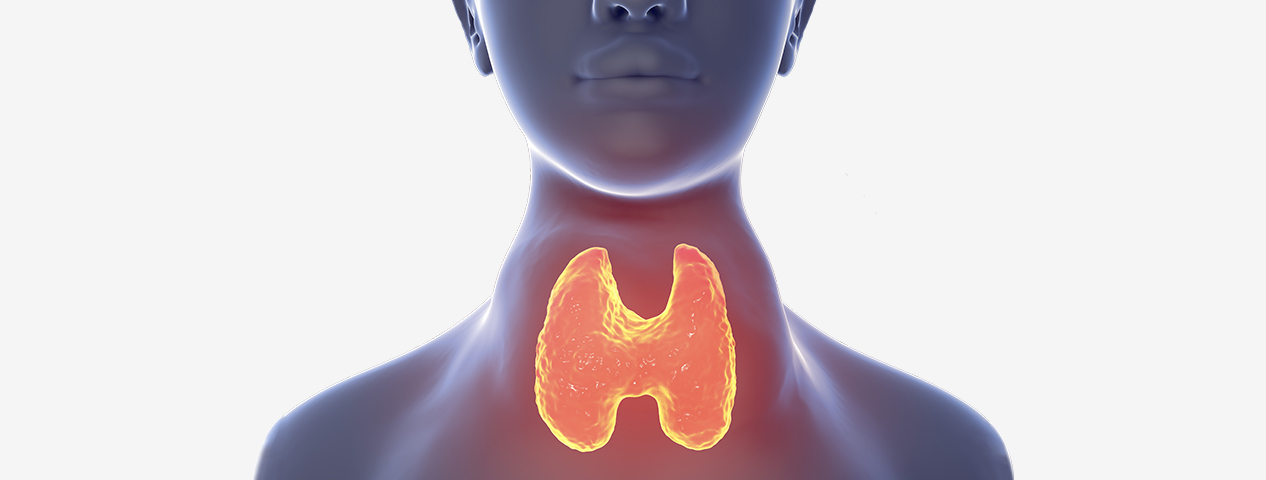
1. “I eat well but keep losing weight” – What Is Hyperthyroidism?
Have you ever caught yourself thinking:
- “I’m eating more than before, but the number on the scale keeps going down.”
- “My heart feels like it’s pounding even when I’m just sitting still.”
- “I can’t sleep well at night and I’m on edge for no clear reason.”
If these issues have been going on for a while, it may be time to think about hyperthyroidism, also called an overactive thyroid.
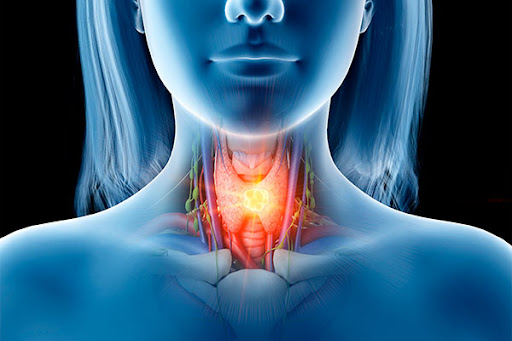
The thyroid is a small, butterfly-shaped gland at the front of your neck. It produces thyroid hormones, which act like your body’s metabolic speed controller.
- When thyroid hormones are in the normal range
→ Your body runs at a stable, comfortable speed. - When the thyroid produces too much hormone
→ Your metabolism goes into “overdrive.”
→ This state is called hyperthyroidism.
When hyperthyroidism develops, several symptoms often show up together, such as:
- Unintentional weight loss
- Heart palpitations and a racing pulse
- Trouble sleeping
- Feeling more nervous or irritable than usual
That’s why so many people end up searching things like
“early signs of hyperthyroidism” or “overactive thyroid self-check” online.
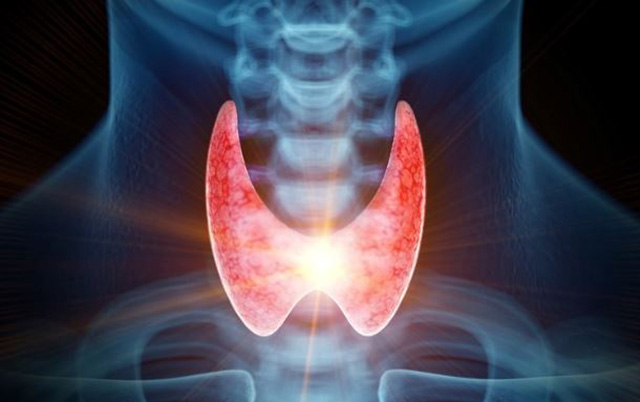
2. Main Causes and Who Is at Higher Risk
2-1. The Most Common Cause: Graves’ Disease (Autoimmune Hyperthyroidism)
The most frequent cause of hyperthyroidism is a condition called
Graves’ disease.
In Graves’ disease, the immune system makes autoantibodies that constantly stimulate the thyroid gland, pushing it to produce too much hormone.
In simple terms, it’s like this:
The thyroid should be getting a signal saying,
“You can rest now, that’s enough.”
But instead, it keeps hearing,
“Work harder! Make more hormones!”
It helps to distinguish these two concepts:
- Graves’ disease
→ The underlying autoimmune disorder that overstimulates the thyroid - Hyperthyroidism
→ The resulting state where thyroid hormone levels are too high
(abnormal lab values and symptoms)
Thinking of it this way makes the relationship much easier to understand.
2-2. People Who More Commonly Develop Hyperthyroidism
Research shows that hyperthyroidism tends to be more common in people who:
- Are women in their 20s to 40s
- Have a family history of thyroid disease
(hyperthyroidism, hypothyroidism, goiter, etc.) - Have been under severe or prolonged stress
- Have recently gone through major hormonal changes, such as pregnancy and postpartum
- Smoke
Other causes include toxic nodular goiter, certain medications, and some forms of thyroiditis, but in everyday clinical practice the most common scenario is:
3. Key Symptoms – When Your Body, Mind, and Heart All Feel Off
3-1. Weight and Metabolism Changes
One of the most noticeable signs of hyperthyroidism is weight change.
Many people say:
“My appetite is the same or even better than before…
but I keep losing weight.”
This leads a lot of people to search phrases like
“why am I losing weight with hyperthyroidism?”
The reason is quite straightforward:
- Excess thyroid hormone raises your basal metabolic rate
- Your body burns more energy even at rest
- As a result:
- You lose weight
- You lose muscle mass
- You may feel weak or exhausted just climbing stairs or walking uphill
3-2. Heart Palpitations and Irregular Heartbeat
Heart-related symptoms are another major red flag with hyperthyroidism.
Typical complaints include:
- A pounding heart even when you’re relaxed or sitting still
- A fast pulse or a sensation that the heartbeat is irregular
- Feeling short of breath or having chest discomfort after mild activity
If this state continues for a long time, the risk of developing:
- Atrial fibrillation (a type of irregular heartbeat)
- Heart failure
- Coronary artery disease
can increase, especially in older adults.
In other words, it’s not just “being a bit nervous” –
it’s a condition that can seriously affect long-term heart health.
3-3. Mood, Sleep, and Nerve-Related Symptoms
Hyperthyroidism doesn’t just affect the body. It can shake your emotions and sleep as well.
Common symptoms are:
- Feeling more irritable or short-tempered than usual
- Anxiety or a constant sense of restlessness without a clear reason
- Trouble falling asleep or not sleeping deeply
- Fine trembling in the hands or fingers
If these symptoms last more than a few weeks, it’s worth considering that the cause may be more than “just stress” and having your thyroid checked can be very helpful.
3-4. Eye, Neck, and Other Symptoms
Other possible signs include:
- Eyes that appear bulging or prominent
- Dry, gritty, or uncomfortable eyes
- A full or thick feeling in the front of the neck (goiter)
- Irregular periods or difficulty getting pregnant for women
- In older adults: mainly weight loss, fatigue, and low mood,
which can be mistaken for “just getting older”
Because symptoms can be subtle or vague in older people, hyperthyroidism is sometimes overlooked unless labs are done.
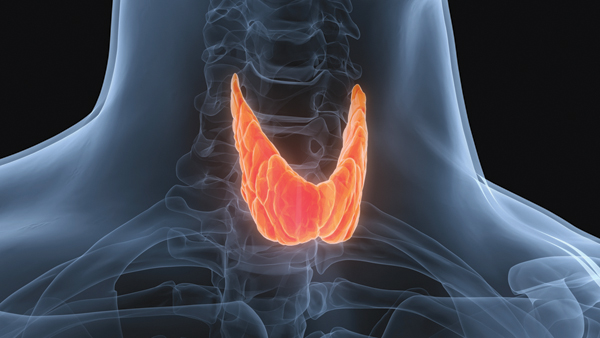
4. How Is Hyperthyroidism Diagnosed?
Online self-checks can give you a rough idea, but an accurate diagnosis requires blood tests and often imaging tests at a clinic or hospital.
4-1. Basic Blood Tests
The key blood tests include:
- TSH (Thyroid-Stimulating Hormone)
→ Usually low in hyperthyroidism - Free T4 and T3 (thyroid hormones)
→ Often high
Sometimes you’ll see a pattern where:
- TSH is low,
- but Free T4 and T3 are still within the normal range.
This is called subclinical hyperthyroidism or mild hyperthyroidism.
Even subclinical hyperthyroidism can:
- Increase the risk of heart disease
- Raise the chance of atrial fibrillation
- Contribute to bone loss and osteoporosis
So whether treatment is recommended will depend on your age, other medical conditions, and overall risk.
4-2. Additional Tests – Finding the Cause
To identify why the thyroid is overactive, doctors may recommend:
- Thyroid autoantibody tests
→ To check for Graves’ disease - Thyroid ultrasound
→ To look at gland size, nodules, and blood flow - Thyroid scan (radioactive iodine uptake test)
→ To assess how the thyroid takes up iodine and distinguish between:- Graves’ disease
- Toxic nodules
- Thyroiditis and other conditions
These results together give a clearer picture of both the cause and the severity of hyperthyroidism.
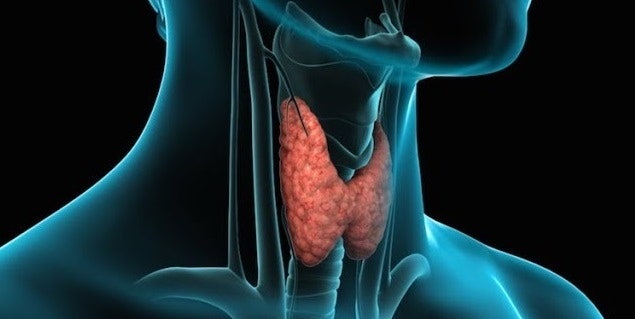
5. Treatment Options – Medication, Radioactive Iodine, and Surgery
Hyperthyroidism treatment generally falls into three main categories:
- Antithyroid medications
- Radioactive iodine (RAI) therapy
- Surgery (thyroidectomy)
The choice depends on factors such as:
- Age
- Other health problems
- Size of the thyroid
- Cause of hyperthyroidism
- Whether the condition has relapsed after previous treatment
5-1. Antithyroid Medications – The Most Common First-Line Treatment
In many countries, including Korea and the U.S., treatment often starts with antithyroid drugs.
Advantages
- Relatively simple: take the medication as prescribed to control hormone levels
- The thyroid isn’t destroyed right away, so in some cases
long-term remission (almost complete recovery) is possible
Disadvantages
- Medications often need to be taken for 1–2 years or longer
- After stopping the drug, relapse rates are reported in some studies to be around 30–70%
- Potential side effects include elevated liver enzymes or, rarely, serious blood disorders
Because of this, while you are on medication it is crucial to:
- Have regular blood tests as recommended
- Adjust the medication dose based on lab results and symptoms
5-2. Radioactive Iodine Therapy – When Medication Fails or Side Effects Occur
If medication:
- Does not adequately control the condition,
- Causes significant side effects, or
- The hyperthyroidism keeps coming back,
doctors may recommend radioactive iodine (RAI) therapy.
Advantages
- Often one treatment (or a small number of treatments) can stabilize thyroid function long term
Disadvantages
- Over time, many patients develop hypothyroidism (underactive thyroid)
→ This usually means lifelong thyroid hormone replacement is needed afterward - Not recommended during pregnancy or breastfeeding
5-3. Surgery – When the Thyroid Is Very Large or Cancer Is Suspected
Thyroidectomy (removal of part or all of the thyroid) may be considered when:
- The thyroid is very enlarged, causing pressure symptoms (trouble swallowing, breathing issues, etc.)
- There are nodules that appear suspicious for thyroid cancer
- Radioactive iodine is not an option or is not desired
After surgery, most patients develop hypothyroidism, which is managed with daily thyroid hormone tablets and regular follow-up.
6. Everyday Lifestyle Tips for Managing Hyperthyroidism
Hyperthyroidism is best managed with a combination of medical treatment and lifestyle changes.
Here are five practical tips you can start using right away.
Tip 1. Don’t Stop Your Medication Just Because You “Feel Better”
With hyperthyroidism, symptom relief doesn’t automatically mean the condition is cured.
- The thyroid and immune system may still be overactive
- The lab values need time to stabilize
Always:
- Take your medication exactly as prescribed
- Discuss any dose changes or discontinuation with your doctor first
Tip 2. Quit Smoking and Keep Alcohol in Check
- Smoking is known to worsen Graves’ eye disease (eye bulging and irritation)
→ Quitting smoking is strongly recommended. - Enjoy alcohol in moderation
→ Especially in the early stage of treatment, avoid heavy drinking.
Tip 3. Manage Iodine-Rich Foods According to Your Treatment Plan
Many people ask about iodine and hyperthyroidism diet.
- Seaweed such as kelp, nori, wakame, and other sea vegetables are high in iodine.
- For most people, normal dietary intake is not a problem.
- However, in certain situations, such as:
- Before a radioactive iodine scan or treatment
- When your doctor specifically recommends a low-iodine diet
you may need to temporarily limit or avoid iodine-rich foods.
The key idea is not “never eat seaweed again,”
but rather “adjust your iodine intake based on your current treatment stage and your doctor’s advice.”
Tip 4. Start Exercise Gently and Increase Gradually
If your thyroid is overactive, jumping straight into high-intensity workouts can be tough on your heart.
A safer approach is:
- Early phase of treatment
→ Start with light walking and gentle stretching - Once your pulse and thyroid levels are more stable
→ Gradually add brisk walking, stationary biking, or light strength training
Listen to your body and increase intensity step by step instead of pushing too hard too fast.
Tip 5. Cut Back on Caffeine and Build a Healthy Sleep Routine
Caffeine and stimulants can worsen palpitations and anxiety.
- Try to avoid coffee, energy drinks, and high-caffeine beverages in the 4–6 hours before bedtime.
- Aim to go to bed and wake up at roughly the same time every day.
- A more regular sleep schedule can support hormonal balance and improve overall well-being.
7. Final Thoughts – Hyperthyroidism Is Manageable
Hearing the words “hyperthyroidism” or “overactive thyroid” for the first time can feel overwhelming.
You might worry about:
- Sudden weight loss
- Constant heart pounding
- Insomnia and mood swings
- The possibility of needing long-term medication
However, current treatment guidelines and recent research show that:
- With timely diagnosis
- The right choice of treatment (medication, radioactive iodine, or surgery)
- And consistent attention to lifestyle habits
(smoking, alcohol, sleep, exercise, diet)
most people can manage hyperthyroidism well and maintain a normal, active daily life.
Quick Summary
- Hyperthyroidism is a condition where the thyroid produces too much hormone, putting your body into metabolic overdrive.
- Typical symptoms include weight loss, rapid heartbeat, hand tremors, anxiety, and sleep problems.
- The most common cause is Graves’ disease, and diagnosis is made using blood tests, plus ultrasound and thyroid scans when needed.
- Treatment options include antithyroid medications, radioactive iodine therapy, and surgery, chosen based on your individual situation.
- Medication adherence, quitting smoking, smart exercise, iodine management, and good sleep and caffeine habits all play an important role in reducing relapse and complications.
Medical Disclaimer
This article is intended for general information and education only.
It does not replace a medical consultation, diagnosis, or treatment plan.
If you have symptoms or concerns related to your thyroid or overall health,
please consult a qualified healthcare professional for personalized advice.






최근댓글